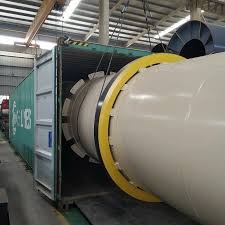

So I was talking to a plant manager last month — guy’s been running a steel processing unit for like 14 years — and he told me something that honestly stuck with me. He said, “We spent three weeks chasing a temperature inconsistency problem. Turned out it was just the seals.” Three weeks. Imagine the labor cost, the downtime, the frustration.
That’s the thing about metal processing kiln sealing — it’s one of those components that nobody talks about until something goes wrong. And by then, it’s usually expensive.
Why Sealing in Metallurgical Kilns Is More Complicated Than It Looks
Okay so let me try to explain this without sounding like a textbook. Think of a rotary kiln like a giant rotating pipe — it’s hot, it’s under pressure (or sometimes vacuum), and it’s constantly moving. Now imagine trying to seal the two ends of that pipe where the rotating part meets the stationary housing. That gap? That’s where everything can go wrong.
In metal processing specifically, you’re dealing with temperatures that can go above 1400°C in some cases. You’ve got oxidizing atmospheres, sometimes reducing ones, and materials inside that react badly if the wrong gases get in or out. So a seal isn’t just a physical barrier — it’s doing like five jobs at once.
There’s a stat I came across that I found genuinely surprising — rotary kiln heat losses through poor sealing can account for up to 10-15% of total energy consumption in some older facilities. That’s not a small number. In a world where energy costs are climbing every quarter, that’s real money walking out the door through a gap nobody bothered to fix properly.
What Actually Happens Inside a Metallurgical Kiln
I think a lot of people (myself included, early on) underestimate how intense the internal environment of a kiln really is. You’re not just dealing with heat. There’s thermal cycling — meaning the kiln heats up, cools down, expands, contracts — and this happens repeatedly over years. The materials being processed, whether it’s iron ore, zinc, alumina or something else entirely, produce dust and fine particles that work their way into every possible gap.
And here’s the part that gets a bit technical but bear with me — different metals require different atmospheres inside the kiln seals. Zinc processing, for instance, needs a very controlled environment to prevent unwanted oxidation. If your seal is leaking, you’re losing atmospheric control, and that directly affects product quality. One Reddit thread I stumbled on (r/metallurgy I think?) had an engineer complaining about inconsistent zinc recovery rates for months before someone finally pointed them toward seal wear as a potential culprit.
The social media chatter around industrial maintenance has actually been growing — LinkedIn especially has seen a lot more posts from plant engineers talking openly about kiln inefficiency. It’s kind of refreshing honestly, like people are finally admitting these “boring” mechanical issues have massive downstream consequences.
The Gap Between Knowing and Doing
Here’s my honest opinion and maybe some people in the industry will disagree — a lot of facilities know their sealing systems are outdated or underperforming, but they don’t act on it until something breaks completely. It’s the classic “if it ain’t broke” mentality. Which I get, shutdowns are expensive, scheduling maintenance is a pain, and nobody wants to be the person who called for downtime unnecessarily.
But the math rarely works out in favor of waiting. A properly functioning kiln seal reduces false air infiltration, which means your burner doesn’t have to work as hard, which means fuel consumption drops. Some manufacturers claim efficiency improvements of 5-8% just from a proper seal upgrade — and in continuous operation that compounds fast.
I’ve also seen cases (well, read about them more than seen, I’ll be honest) where inadequate sealing in metal processing kilns led to environmental compliance issues. Dust and emissions escaping from poorly sealed ends is not just a performance problem — it’s a regulatory one. And those fines? Not fun.
Material Choices Actually Matter More Than Most People Think
Not all kiln seals are made the same, and this is something that often gets overlooked in the purchasing process. You can’t just grab whatever’s cheapest and slap it on. The materials need to be compatible with the specific thermal range, the process atmosphere, and the type of rotation speed your kiln operates at.
Graphite-based seals tend to perform well in high-temperature oxidizing conditions. Fiber-based configurations can handle a different set of demands. Some hybrid designs use a combination to handle the mechanical stress of rotation while also maintaining thermal integrity. The engineering here is more nuanced than it looks from the outside.
There’s also the question of seal geometry — lamellar seals, spring-loaded designs, contact seals — each suits a different kind of kiln and process. Getting this wrong isn’t a small mistake. It’s the kind of thing that shows up as a recurring maintenance headache for years.
One Thing I Keep Coming Back To
The plant manager I mentioned at the beginning? After they fixed their sealing issue, they saw energy savings almost immediately. Nothing dramatic, not some massive transformation — just consistent, measurable improvement. Temperature control stabilized, fuel use dropped slightly, and their product output became more predictable.
That’s kind of what good kiln sealing does. It doesn’t announce itself. It just quietly makes everything else work the way it’s supposed to.
And honestly, for something that rarely gets the spotlight in industrial conversations, that’s worth paying a lot more attention to.